
Flexible hose & connector fixes, $100–$200
The brittle connector behind the cooktop, small part, common leak source, quick fix.
Gas is the one trade where "pretty confident" is not a standard. Leaks found and repaired, cooktops and heaters connected, lines run and certified: all of it by licensed gasfitters, all of it pressure-tested before the gas goes back on in Chifley.
NSW reserves every gas task, down to connecting an oven, for licensed gasfitters, and the logic is unsentimental: plumbing mistakes stain ceilings, gas mistakes burn houses and poison air. The leaks we attend have a recurring origin story, and it is rarely the pipework’s idea, it is a confident DIY connection or a handyman’s thread tape, discovered later by someone’s nose.
What the licence actually buys is the ending: the whole installation held against a manometer until the needle refuses to move, every appliance checked for a clean blue burn and honest ventilation, and the work done to AS/NZS 5601, the clause your insurer reaches for when something ever goes wrong. Across Chifley and the Eastern Suburbs, no gas job of ours skips that ending.


So close to the ocean, Chifley’s pipes and fittings cop constant salt and moisture that speed up corrosion, cracking and leaks over the years.
Salt attacks external gas pipework, regulators, meter connections and appliance fittings continuously. It is the reason a coastal property routinely fails a pressure test at a fitting rather than in a length of pipe.
Visible rust staining or white crusting at a joint is the early warning. It is cheap to address at that stage and considerably less so once the fitting is weeping gas.
Chifley is a quiet coastal suburb in Sydney’s south-east (postcode 2036), tucked between Maroubra, Malabar and Little Bay near the golf links and the ocean. Its postwar homes and salt-air setting make drains a recurring concern here, one we handle every day.
Homes near the water are often closed up tighter against wind and weather than their inland equivalents, and modern draught-proofing has made that more pronounced. Gas appliances need air, and a well-sealed room changes the ventilation calculation.
It matters most for older heaters and anything unflued. If a room with a gas appliance has been renovated to be more airtight, the appliance should be re-assessed for that room rather than assumed still suitable.
Outdoor gas appliances near the water live hard. Burners corrode, jets block with salt deposit, and hoses perish faster than the manufacturer's expected life.
It is not a reason to avoid an outdoor installation, but it is a reason to specify for the setting, stainless where it is exposed, a hose replacement interval, and a cover that is actually used.
Meters and regulators on the weather side of a property near the water take the worst of it, and a corroded regulator is both a supply problem and a safety one.
Relocating or shielding a badly exposed meter assembly is straightforward work that is rarely done until something fails. If yours is green, crusted or streaked with rust, it is worth raising.
Three things, none needing a plumber: the condition of the fittings at the meter, whether any external gas pipework has rust breaking through the coating, and whether the flexible hose on an outdoor appliance has gone hard or cracked.
Any of those means booking a test. A gas leak on a coastal property usually begins as corrosion that was visible for a year first.
Pool heaters, outdoor fires and alfresco appliances are common on waterfront properties, and they are the largest gas loads most homes ever add. A pool heater alone can exceed the rest of the house combined.
So the first question is never the appliance, it is whether the meter and the run can carry it. That gets established before anything is ordered, because the alternative is an expensive heater that never reaches temperature.
Gasfitting is licensed work in NSW and there is no handyman tier of it. It is not bureaucratic caution, unburnt gas and incorrectly burnt gas are both lethal, and the second one is odourless.
It also has consequences beyond safety. Unlicensed gas work voids home insurance, invalidates appliance warranties, and surfaces during a sale. Every job here is done under licence and finishes with a certificate.
The brittle connector behind the cooktop, small part, common leak source, quick fix.
Leaks at threads, valves and joints: found, sealed properly, retested under pressure.
Corroded or damaged runs cut out and replaced. Concealed lines needing access run $800–$2,500.
Cooktop, oven or heater connected, tested and certified. More if a new line or bayonet has to be run to reach it.
The going Sydney range for licensed gas work in 2026, with call-out fees typically $80–$150.
No gas job of ours ends without holding pressure on a gauge, that is the receipt that matters. Figures here are indicative of the 2026 Sydney market rather than a quote from us, you get your own number as a fixed price before any work starts.
Suspected leaks start with the supply off at the meter and air moving through the space. Diagnosis begins only after the installation stops feeding the problem.
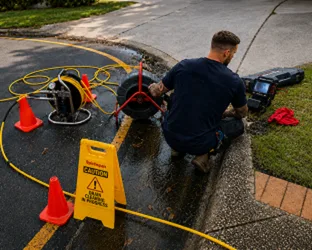
A manometer says whether the system is losing gas; detection fluid and instruments then walk the installation to the guilty joint, fitting or run.

The failed component comes out and compliant material goes in, to AS/NZS 5601, whether that is one connector or metres of rerun line.
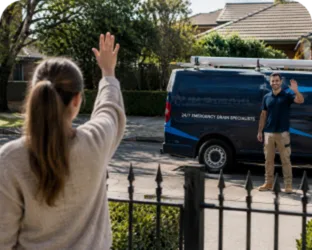
The full installation holds on the gauge or we are not done. Appliances relit, flames checked blue, ventilation confirmed, compliance documented.
Nor should it, legally. One visit: connected, tested, certified, warranty intact. The proper way is also the cheap way, counted honestly.
Licensed gasfitters, every job pressure-tested and certified. Smell gas right now? 131 909 first, then us.

Leave your details and our local Chifley team will call you back fast.