
Call-out or first hour: $80–$180
What most Sydney plumbers charge to attend and start work. Ask for it on the phone. Anyone who will not name it has answered a different question.
Hot water that has given up, a mixer that drips, a toilet that runs, a leak showing on a wall, a gas appliance that needs connecting properly. All of it is licensed work, all of it is what we do, and you get the number before anyone picks up a tool.
Most people meet a plumber at the worst possible moment, which gives the trade a reputation for emergencies it only half deserves. The larger part of the work is planned and unglamorous: a hot water system reaching the end of its life, taps and mixers that have started to weep, toilets that run, a gas appliance that needs connecting properly, and the rough-in behind every bathroom and kitchen renovation.
We work across Chifley, Maroubra, Malabar, Little Bay and the wider Eastern Suburbs, which matters more for the small jobs than the large ones. A tap washer is not worth a ninety minute drive to anybody, and that is exactly how suburbs get quietly neglected by operators covering the whole city from one depot.


With the coast and golf links nearby, wind-blown sand and grit find their way into gully traps and drains, gradually choking the flow.
Sand drains freely, which sounds helpful and is, until you consider what a pipe is resting on. Fine material migrates over time, particularly where water moves through it, and bedding that supported a line evenly when it was laid can wash out from under sections of it.
The result is not usually a break. It is a gentle sag, and a sag holds water and collects what passes through. It is a good argument for looking inside a line before assuming a recurring problem is behavioural.
Ground close to the water holds more of it, sits lower and moves more than ground further up. Over decades that shows up as joints that have opened slightly, falls that have flattened and lines that silt where they once ran clean.
So close to the ocean, Chifley’s pipes and fittings cop constant salt and moisture that speed up corrosion, cracking and leaks over the years.
None of that is urgent by itself. It is the reason a fault here often turns out to be the last stage of something that has been developing quietly for years, and why looking inside the line is worth more than clearing it and leaving.
A downpour is a free diagnostic if you watch during it. Where water pools, which downpipe backs up at the head, whether the gully runs, whether anything smells afterwards: those four observations narrow a stormwater fault down more than an hour of guessing on a dry day.
Heavy downpours can overwhelm pits and lines on lower-lying blocks, causing water to back up. We clear them and keep them flowing.
Write down what you saw and when. A plumber arriving to a dry, tidy yard is working blind otherwise, and the difference between a clean-out and a repair is usually decided by whether it happens every time or happened once.
Many of Chifley’s postwar homes still run on original clay and earthenware pipes that crack, sag and let roots in over time. A camera pinpoints the problem.
Clay is not a defect. It is rigid, round and predictable, and a well laid clay line can outlast the house above it. What ages is the joints: short pipe lengths mean many of them, and the mortar or rubber ring at each one is the part that gives.
That geometry is why a clay line is usually the easiest kind to repair properly. The barrel is generally still sound, so the work is sealing joints rather than replacing pipe, and that can be done without opening the yard.
If something backs up at roughly the same spacing each time, eighteen months, then eighteen months again, that is not bad luck and it is not what anyone is putting down the sink. It is a fixed defect filling at a predictable rate.
The interval is genuinely diagnostic. Fast regrowth points at a live root mass through an open joint; slow build points at grade or debris. Keep the dates on a note in your phone, they tell a plumber more in ten seconds than a description of the symptoms.
Digging in sand is fast and then suddenly difficult. Trench walls do not hold, so a hole that would stand up unaided in clay needs shoring or battering, and reinstatement has to be compacted properly or the surface drops months later.
It is worth knowing because it affects both the quote and the timing. Anyone pricing an excavation here without asking about ground conditions has not thought about the second day.
Roots are not looking for your pipe. They are looking for water and air, and a joint that has opened even slightly gives them both. That is why the same species can sit beside a sound line for fifty years and colonise a failing one in two seasons.
The practical answer is almost never the chainsaw. A mature tree is usually worth more to the property than the repair costs, and the roots already inside the line do not leave when the trunk does. Sealing what they came through is the fix.
What most Sydney plumbers charge to attend and start work. Ask for it on the phone. Anyone who will not name it has answered a different question.
The standard weekday range once the first hour is done. After-hours and weekends sit higher, because someone is out of bed for it.
Tap and mixer replacements, toilet repairs, a failed valve, swapping tired flexible hoses. Attendance plus the work plus minor parts.
Elements, thermostats, valves and anodes on a tank with life left in it. A full replacement is quoted separately and depends on the unit.
Renovation rough-in, gas line work, anything needing excavation or a second pair of hands. You get a written figure before it starts.
Indicative Sydney ranges for 2026. Your job gets a fixed price before work starts. Figures here are indicative of the 2026 Sydney market rather than a quote from us, you get your own number as a fixed price before any work starts.

One call reaches someone who can tell you what it probably is and what it is likely to cost, including when the honest answer is that it can wait until the week.
The nearest available crew covers Chifley and the streets around it, stocked for the faults this housing stock actually produces rather than a generic van fit-out.
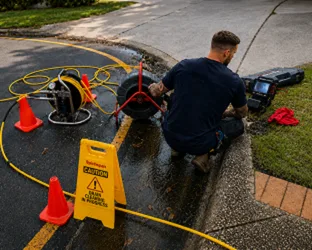
You see what failed and why, and you get one fixed number covering the repair. If opening it up changes the job, you hear that then and not later.

Completed, tested, tidied, and documented where NSW requires a compliance certificate for the work carried out.
Leave your details and a licensed plumber will call back, tell you what it is likely to be, and book it only if it actually needs booking.
Licensing, pricing, timing and the things worth asking before anyone starts.

Phone is quickest. The form works just as well, and it reaches the crew covering Chifley rather than a national call centre.

Leave your details and our local Chifley team will call you back fast.